Recovery in Pockets
Venezuela's oil recovery may become visible in individual fields, workshops and industrial towns long before it looks like a national comeback.
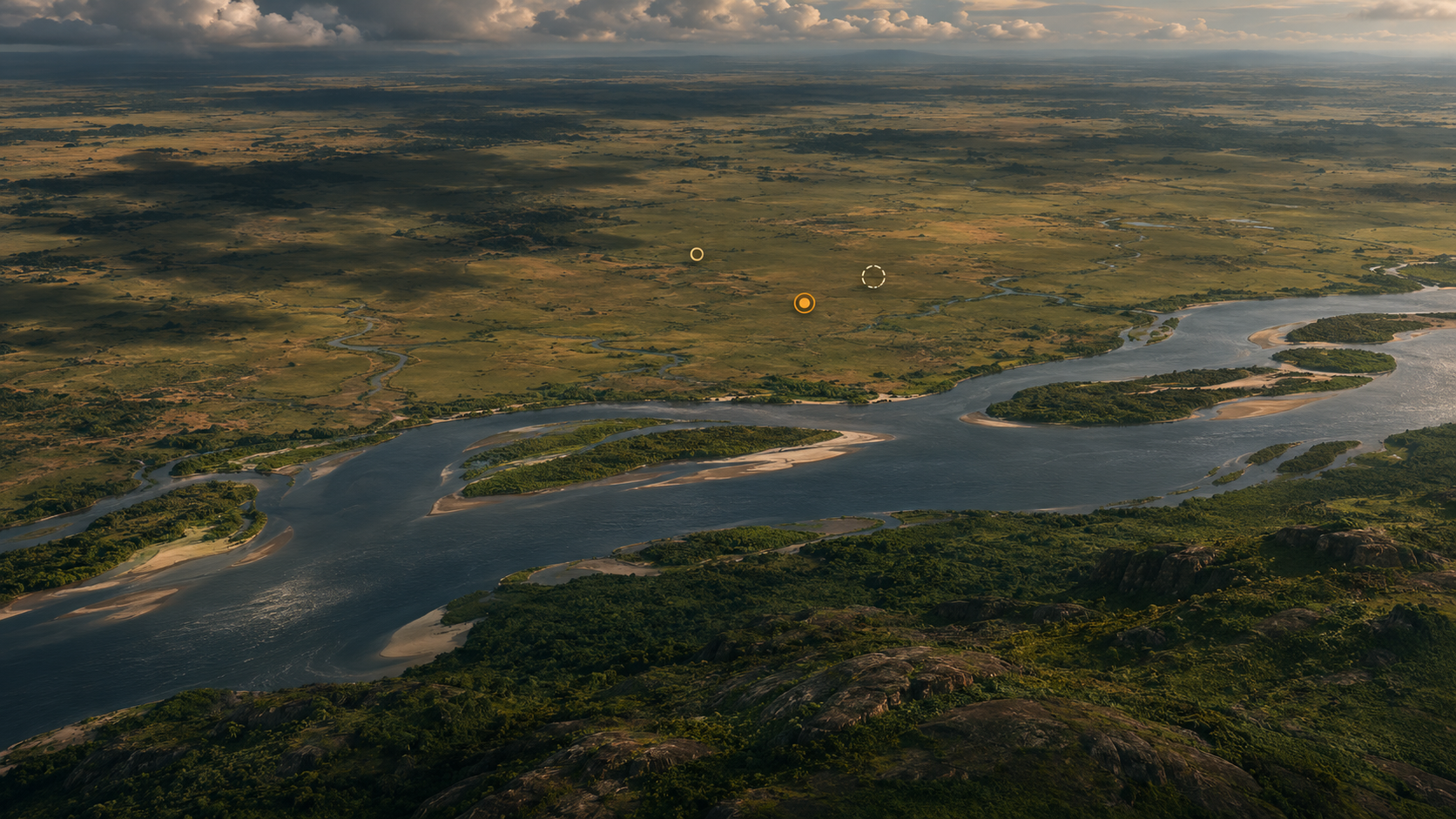
Editorial illustration of the Orinoco landscape; not a photograph of a specific named field.
Venezuela's oil recovery may become visible in individual fields, workshops and industrial towns long before it looks like a national comeback.
Venezuela's oil industry is returning to the map, but not everywhere at the same speed. In one part of the Orinoco Belt, an international operator has taken control of a major field and named the company that will support its drilling campaign. Elsewhere, rigs are reportedly operating, contractors are preparing to reactivate wells, and more equipment is arriving from abroad. Some of those movements have named destinations, others don't.
They look like different stages of a possible recovery, happening in different places, and they raise a question national production figures can't answer very well: which parts of Venezuela are beginning to come back first?
The recovery has addresses
On October 28, Eni announced it had started operating Junín 5, in the Orinoco Belt, as the field's new operator. The same day, Weatherford announced it would take part in the field's workover and drilling campaign, pairing an operator that carries the technical and commercial responsibility with an established oilfield-services company.
Junín 5 was already producing about 12,000 barrels per day when Eni signed its agreement in September, so the October announcement isn't evidence of a sudden jump in output. What changed is who directs the next phase of work and which services are being assembled around it.
Nearby, NABEP reports drilling rigs active in the Junín area. Its October 31 update identified three working rigs at Junín 10, alongside a broader expansion of its drilling and workover fleet. That's a different kind of evidence: company-reported activity in a named block, rather than a new operating arrangement.
Then there's Baré. GeoPark's production participation contract took effect on November 2, and the company expects to take operational control before the end of the year. Its initial plan says a lot about the nature of this recovery: for 2027, management expects roughly 100 to 150 well reactivations and 25 workovers, with no new drilling planned until 2028. More than half of the contracts considered critical to the takeover had already been awarded by November 4. Baré's next chapter starts largely with wells, equipment, and facilities that already exist.
So within the same oil-producing region there are three different stories: operating control, reported drilling activity, and preparation to bring existing assets back into service. On a national chart, most of that distinction disappears.
A rig arrives. Where does the work go?
Ensign offers another example. On its November 6 earnings call, management said two of its rigs were operating in Venezuela and a third had arrived, with drilling expected to begin the following week. More rigs were being prepared for deployment. But the company didn't publicly say which field or operator the incoming equipment would serve. Nabors has also signed a multiyear contract for a rig expected to deploy to Venezuela in early 2027, with the customer and field undisclosed.
These announcements are useful even with the missing details. A rig leaving Texas, arriving in Venezuela, and starting work in a particular field amounts to three separate geographical events, each with its own ports, contractors, routes, and service requirements. Until we know the destination, we can't tell which local economy might benefit from its arrival. That gap is itself information.
What happens around a producing field?
A returning drilling rig is easy to notice. Much of the activity around it isn't. An older well may need pumps, tubing, electrical repairs, testing equipment, or new instrumentation before it can sustain production. A workover campaign needs technicians, transportation, workshops, tools, and suppliers, and an operating field needs maintenance long after the first intervention. International service companies can handle some of that. The rest depends on local businesses and workers who already know the region.
Picture two towns with similar histories in Venezuela's oil industry. One sits along a route serving fields where operators are hiring contractors, repairing equipment, and mobilizing crews. The other is near assets whose rehabilitation hasn't begun. Both belong to the same national oil economy, yet their near-term prospects could look very different. The first might see more demand for mechanics, transport, industrial supplies, and lodging, while the second keeps waiting for investment to reach the surrounding fields.
Those are possibilities, not measured local economic outcomes, and we don't yet have the evidence to say which towns are living either version. But they point to something worth investigating: an oil recovery can change the relative importance of places before it changes the national economy in any dramatic way.
The importance of what is already there
Venezuela's oil geography was built over generations. Fields, service towns, workshops, pipelines, roads, processing facilities, and export terminals grew up around different producing regions, and many of those assets survived years of declining activity, though their condition and usability vary.
That existing industrial geography matters. A region with experienced crews, access roads, repair facilities, and nearby contractors might respond to new investment very differently from one where the supporting systems have disappeared. The opportunity may not belong to the region with the biggest reserves. It may belong to the place where a particular kind of work can resume with the fewest missing pieces. Baré's focus on reactivating wells makes this especially clear, since the early work is about restoring an existing production system rather than starting a new one.
There's also the workforce. Experienced Venezuelan oil workers are spread across the country and abroad, and if certain regions become active again, some may find a way back into an industry they know. Whether those jobs offer enough pay, continuity, and decent working conditions to bring people back is a separate question. Equipment can return before the workforce does, and sustained activity will need both.
Reading a different map
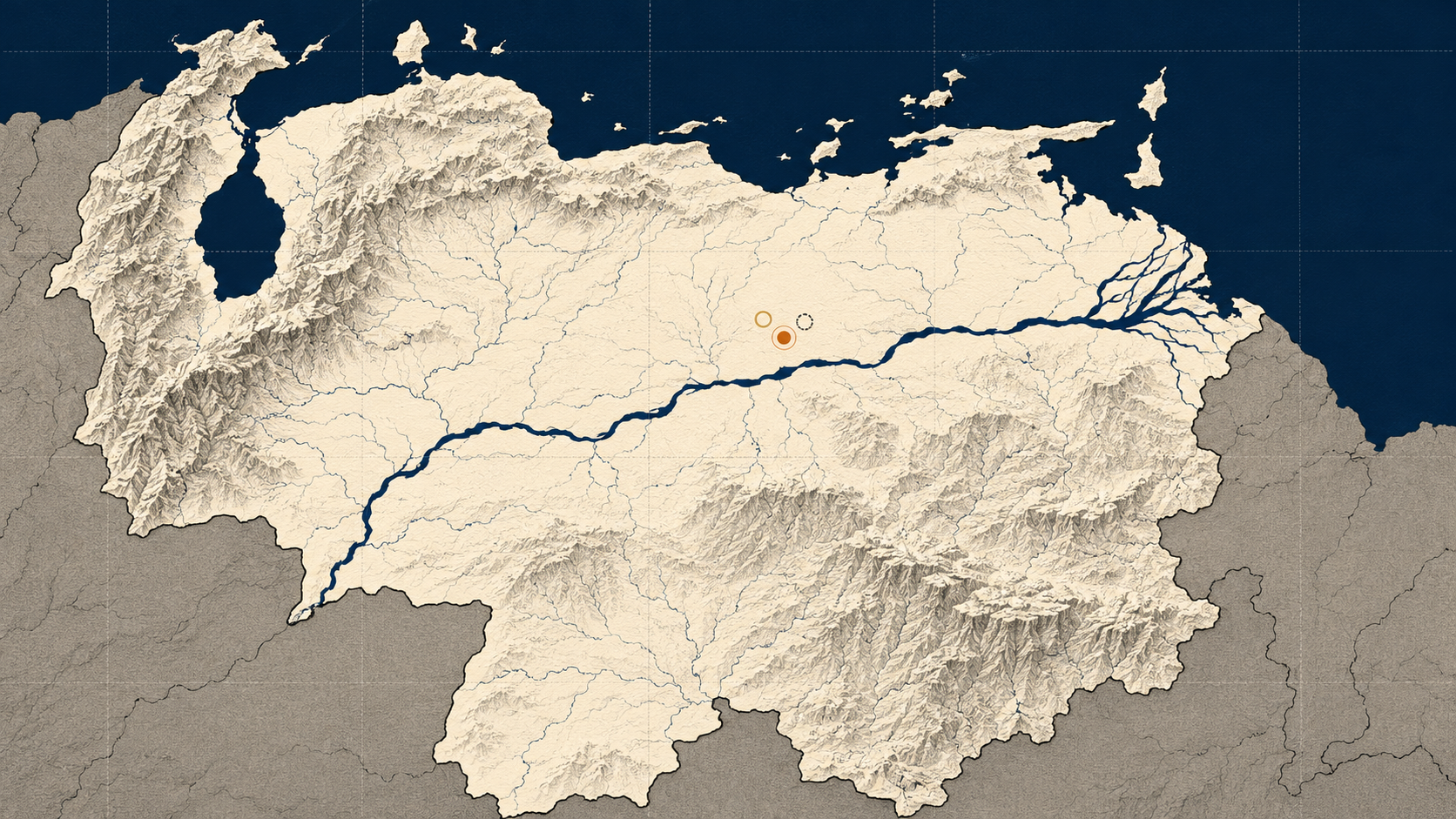
Illustrative regional map. For sourced field positions and operational status, see the Venezuela Activity Map.
At Frontier Grid, we recently began mapping selected Venezuelan fields, contractors, and operating milestones. The map is deliberately incomplete. Some fields have identifiable locations and company-reported activity, while other records describe equipment movements without enough information to identify a destination. We also separate a contracted rig, one that has arrived in the country, and one that is actually drilling.
The goal is to follow how activity develops across the territory, not to produce a national count out of incompatible company disclosures. Over time, that could help answer questions aggregate production statistics make hard to see. Where are operators returning first? Which regions are attracting contractors? Where are existing wells being reactivated? Which places are moving from preparation into sustained operations? And perhaps most interesting of all, which communities and local businesses begin to feel the change? A map can't answer all of that today, but it gives us a way to watch it happen.
A recovery that may remain uneven
It's tempting to describe Venezuela's future in national terms: a reopening, a revival, a return to the global oil market. Those descriptions can be useful, but they can also hide important differences. Some fields may attract capital and equipment quickly, while others stay constrained by power, processing, logistics, or the condition of their wells. Some contractors may win years of work, while others see announced opportunities that never turn into a purchase order. And some towns may feel renewed industrial activity while others stay largely the same.
That unevenness wouldn't necessarily mean the recovery has failed. It could be how recovery actually begins.
Venezuela may not come back as one large industrial system moving forward together. It may begin in pockets: particular fields, particular companies, and particular communities whose circumstances change before the rest of the country catches up.
The next question isn't only how many barrels Venezuela can eventually produce. It's where the work returns first, and what those places become when it does.
Explore the Venezuela Activity Map to follow selected fields, operators, contractors and operating milestones.
Sources
- Eni — Junín 5 operations, October 28, 2026
- Weatherford — Junín 5 drilling and workover campaign
- GeoPark — Baré operational takeover, November 2, 2026
- GeoPark — Q3 2026 earnings call, November 4
- Ensign — Q3 2026 earnings call, November 6
- Nabors — Q3 2026 results, October 27
- NABEP — Operational updates