Counsel
SIGN / DON’T SIGN · MOBILIZE / HOLD
Connect the legal opinion to asset control, work-order authority, invoice approval, payment control, and the physical operating chain.
Frontier Grid maps whether a Venezuela operator can pay, control the asset, and execute the first 90 days—before you put cash, crews, credit, or an opinion behind it.
For counsel, capital, and vendors deciding whether to sign, fund, bid, or mobilize.
Energy, services, logistics, capital, and operating decisions increasingly intersect across this regional system.
Counsel, capital, and vendors still have to decide whether to put an opinion, cash, credit, crews, or equipment behind it.
Connect the legal opinion to asset control, work-order authority, invoice approval, payment control, and the physical operating chain.
See whether the operator, payment priority, first draw, and 90-day work program can support the exposure.
Map receivable, crew, equipment, certification, and source-of-payment risk before committing resources.
A license, contract, MOU, or offtake letter can establish permission or intent. It does not prove that the operating chain can pay, move, or perform.
Who holds the right, controls the asset, can approve work, and can suspend performance?
Who issues the work order, accepts delivery, certifies the invoice, and authorizes payment?
Where does revenue land, which claims come first, and when does cash become usable?
What can actually be staffed, equipped, funded, and executed after the effective date?
Which processing, storage, quality, transport, and export dependencies must work? For Orinoco heavy crude, that may include diluent and José. Other assets follow different paths.
An 8–15 page operating decision file on a named operator, contract, or bid. It separates confirmed, inferred, unknown, and conflicting evidence; maps the payment and operating chain; and shows what must be verified before you sign, fund, bid, or mobilize.
The exact sign, fund, bid, or mobilize question and the conditions that control it.
Confirmed, inferred, unknown, and conflicting evidence tied to sources and dates.
Authority, payment, physical execution, and first-90-day dependencies.
The documents, questions, and triggers that could change the decision before exposure.
Each article follows the asset, contract, payment path, logistics, or physical system that determines what can actually happen next.

The Orinoco Belt needs diluent coming in through José before the crude can go out. The immediate problem is not a new port. It is recovering José — and figuring out who pays for it.

Venezuela now has permits, barrel potential, and interested buyers. What still isn’t defined is how the money actually gets to the oil projects.
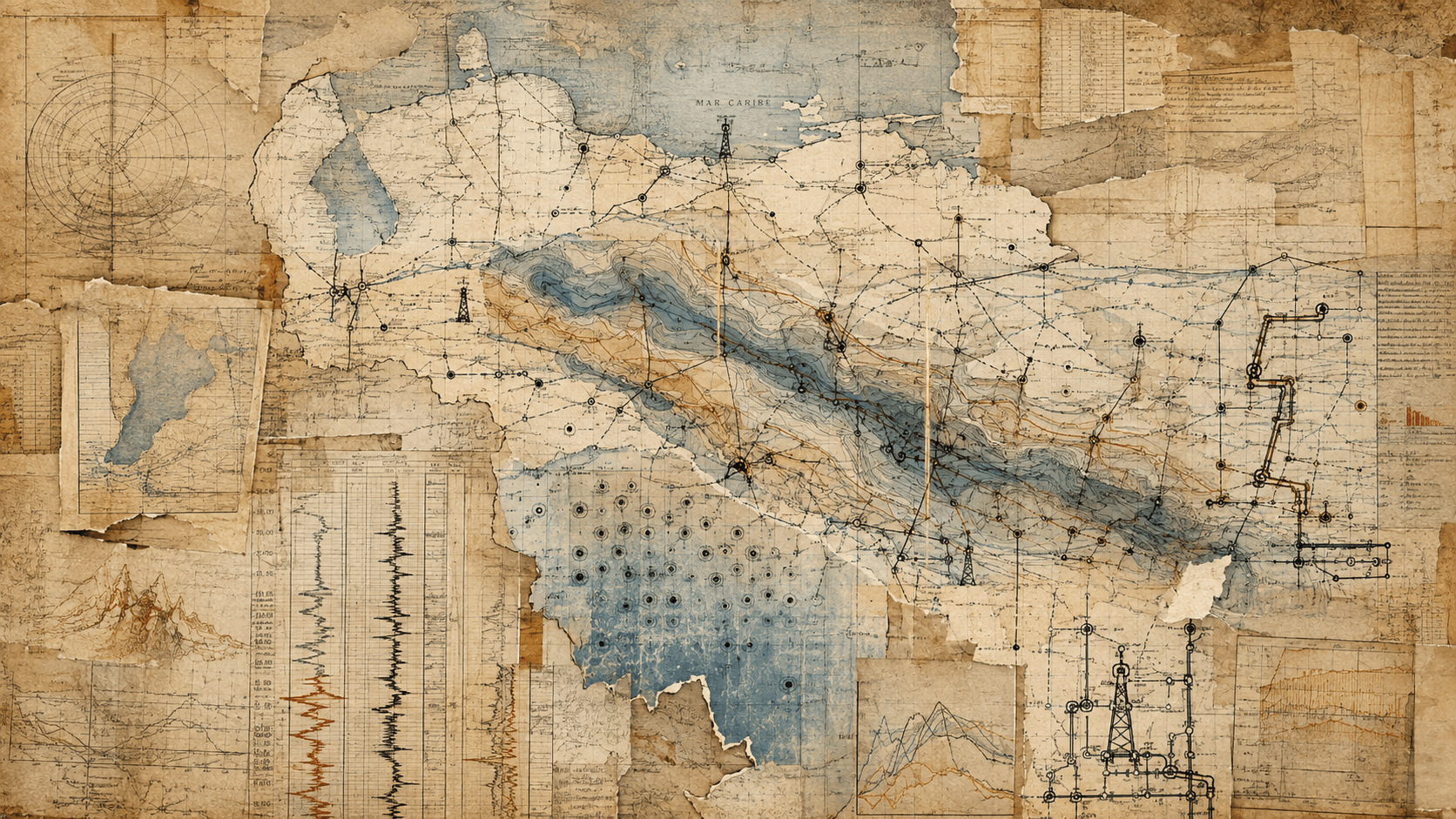
The first big move is not drilling. It is rebuilding the operating map well enough to decide where the next dollar should go.

Geopolitical control can move at political speed. Oil cannot. The gap between the announcement and the system that can produce, move, and monetize barrels is execution.
Each file ties its conclusions to sources and dates, preserves unresolved questions, and identifies what could change the assessment. A material change in evidence calls for a review of the conclusions that depend on it.
Direct support from official records, contracts, filings, company disclosures, or operating data.
A conclusion supported by several signals but not yet established as fact.
A material question for which the available evidence does not support an answer.
Sources or claims point in different directions and remain unresolved until better evidence arrives.
Occasional, source-backed updates on operators, payment paths, field mobilization, processing, logistics, and export routes across Venezuela and the Gulf–Caribbean system. No daily news digest.
Bring the project, operator, contract, or site you are evaluating, the decision, target date, and unresolved dependencies.
Discuss a decision